


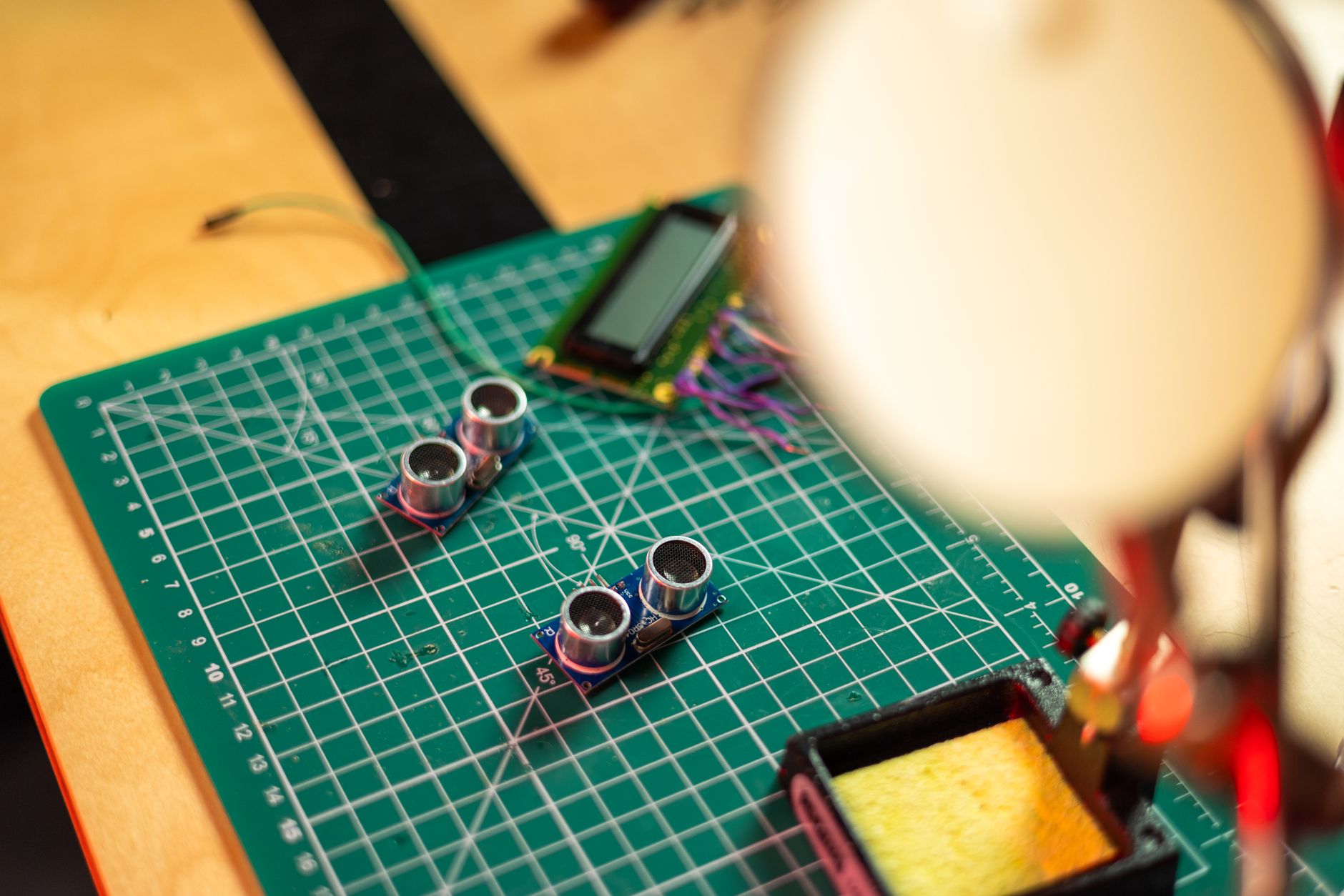

Featured image: Photo by ThisIsEngineering on Pexels
Reimagining Smart Home Presence Detection: A Cost-Effective Alternative
Traditional presence sensors, such as the Aqara FP2, often come with a steep price tag—$80 per room—while failing to address a critical limitation: they cannot detect stationary occupants. This gap in functionality has led many to explore alternatives, such as combining an ESP32 microcontroller with mmWave radar technology. This combination, costing approximately $15 per room, offers a more precise method of detecting presence, even when individuals are motionless.
The core of this solution lies in the mmWave radar module, which emits signals and analyzes reflections to detect minute movements, such as the rise and fall of a chest during breathing. Unlike passive infrared (PIR) sensors or Wi-Fi-based motion detectors, which rely on physical movement, mmWave radar can identify occupants even when they are seated or asleep. The ESP32-C6 board, paired with the LD2410C module, forms the hardware foundation. Priced at around $5 for the ESP32-C6 and under $10 for the LD2410C, the components are readily available on platforms like AliExpress.
Integration with home automation systems like Home Assistant is achieved through ESPHome, an open-source framework for configuring ESP-based devices. By configuring the LD2410C’s UART settings and adding the LD2410 platform, users can access presence data, along with entities indicating movement or stillness. This data can be used to trigger lighting controls—activating lights upon detecting movement and deactivating them when stillness is confirmed.
However, the system is not without challenges. False positives may occur due to environmental factors such as ceiling fans or moving curtains. Tuning the radar’s sensitivity and adjusting detection thresholds is necessary to minimize these issues. Additionally, each room requires its own sensor, as mmWave signals weaken through walls. Power outlets must be accessible in every room to support the hardware, a consideration not accounted for in the $15 per-room cost.
Bluetooth Proxies for Identity Tracking
To enhance functionality, the system can be augmented with Bluetooth proxy capabilities. An ESP32 can act as a Bluetooth scanner, detecting BLE advertisements from phones or wearables. When combined with the Bermuda integration in Home Assistant, this feature can estimate which room a device is in. While this adds identity tracking, it relies on users carrying compatible devices, making it less reliable than the radar’s presence detection.
FAQ
Can mmWave radar detect someone who is not moving?
Yes. The mmWave radar can detect breathing patterns, even when a person is stationary, by analyzing minute chest movements.
What is the cost of the hardware per room?
The ESP32-C6 board costs approximately $5, and the LD2410C module is available for under $10, totaling around $15 per room. This does not include cables or adapters.
How does the system handle false presence reports?
Environmental factors like fans or moving curtains can cause false readings. Users must manually adjust sensitivity settings and thresholds to reduce these occurrences.
The Hard Truth
While the ESP32 and mmWave radar solution offers a cost-effective alternative to commercial presence sensors, it requires significant tuning and access to power outlets in each room. The initial setup is time-intensive, and users must be prepared to troubleshoot false positives. For those prioritizing immediate functionality over customization, a pre-built sensor like the Aqara FP2 may be a more practical choice.
Source Attribution
Source: XDA