


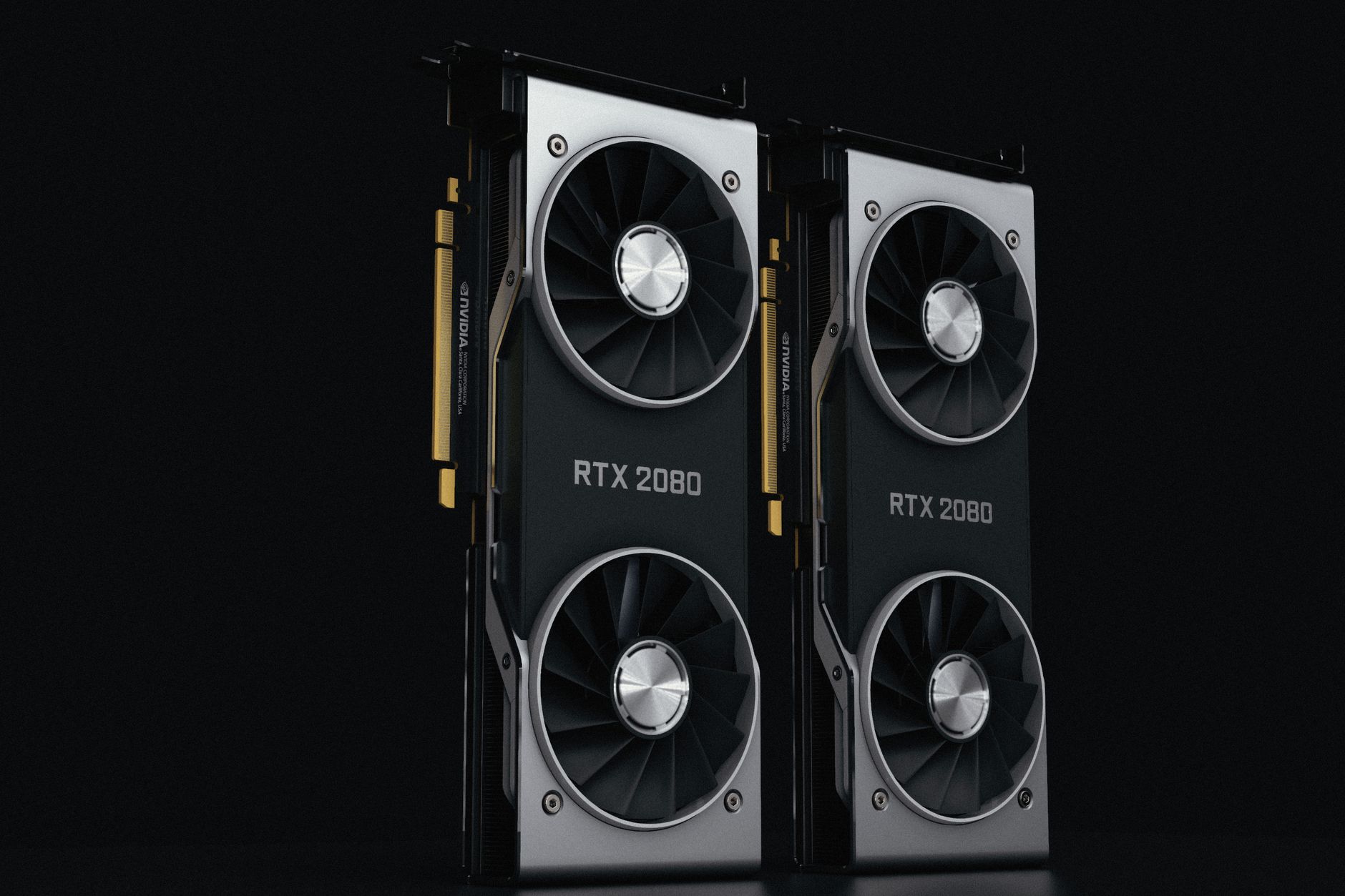

Featured image: Photo by Nana Dua on Pexels
Chinese AI Models May Have Used Banned Nvidia Chips, Study Suggests
A new analysis claims that several prominent Chinese AI models, including DeepSeek V4 and Kimi K3.1, may have been trained using Nvidia Blackwell GPUs, a product subject to U.S. export restrictions. Researchers from UnemploymentLabs, an independent research group, developed a statistical method to trace the hardware used in training open-source models by analyzing patterns in their weight distributions.
The technique hinges on the unique architecture of Nvidia’s Blackwell and Hopper chips, which have distinct counts of shader modules (SMs). For example, Hopper chips feature 132 SMs, while Blackwell B series have 148 and Blackwell GBs have 152. These differences, combined with the thread counts used during training (2,048 per SM on Blackwell and Hopper), create a signature that the researchers say can be matched to model weights.
By replicating the initialization process used in training large language models—where weights are randomized using Nvidia’s cuRAND library—the team found a strong statistical correlation between their results and the weights of DeepSeek V4, Kimi K3.1, MiniMax-M3, and Ling-3.1-Flash. Altering the SM or thread counts during their tests disrupted this correlation, reinforcing the method’s validity.
However, the researchers emphasize that their findings do not prove illegal activity. While the U.S. restricts the export of Blackwell GPUs to China, the study notes that Chinese companies can legally rent such hardware abroad. Recent examples, like Tencent’s partnership with Oracle, illustrate that access to these chips is still possible through third-party arrangements.
The analysis is limited to models with publicly available weights and cannot identify specific chip variations beyond SM counts. It also ruled out AMD’s MI300X cards for DeepSeek V4 by comparing weight patterns, as AMD hardware did not produce the same statistical distribution.
Frequently Asked Questions
How did researchers determine the GPUs used for training?
The team used statistical analysis of model weights, focusing on patterns generated during initialization. This process relies on Nvidia’s cuRAND library and the unique SM and thread counts of Blackwell and Hopper chips.
Can this method be applied to all AI models?
No. The technique only applies to models with open weights and depends on the software stack used during training, primarily PyTorch and CUDA-based tools.
Does this prove export violations occurred?
No. The study does not confirm illegal activity, as the evidence does not trace the chips’ origin or show how they were accessed. Legal access through foreign cloud services remains a possibility.
The Hard Truth
This study raises questions about hardware supply chains but does not definitively prove violations of export laws. The method’s limitations—such as its reliance on open weights and inability to identify exact chip models—mean the findings are circumstantial. Users should note that the implications for AI development and trade policies remain unclear without further investigation.
Source Attribution
Source: Latest from Tom’s Hardware